New Posts
  • Hi there guest! Welcome to PoliticalJack.com. Register for free to join our community?

A Mechanics' Lien

There was also organized labor in those days. These days, not so much. About the only people who still have unions are civil servants and major league athletes.

Yep. In the few industries where there are still strong unions, pay remains good. For example, unionized line workers in the energy industry make $30-$40/hour, with good benefits. Once you count overtime, it's not hard to make six figures. Unionized longshoremen can, likewise, make six figures. Some right-wingers will treat that as an outrage, but those kind of blue-collar incomes, relative to GDP/capita in this country, is in line with what people with decent blue-collar jobs used to be able to expect, in the 1960s. It's enough for a single wage-earner to support a family with a modest home in a good neighborhood with a new car, and to afford to set the kids up for an even better life in the next generation. It's the price for the American Dream, as understood in that earlier economic age. It's only because the rest of America's middle class is getting such crappy deals that those decent deals look extravagant. When non-unionized people have two wage earners slaving away and yet still can't afford those things without crushing debt, it resets the notion of what's "fair," in a really ugly way.
 
Who gives a shit what others make? Go get it yourself!!

Ika~

The issue is not what people make but what they take. This elite is using its class-based privilege to abscond with wealth they had no role in creating. If you aren't concerned about wealth being taken from workers, it would still seem obvious that investors are also being ripped of.

I also do not understand you 'Go get it yourself" quote. I should remedy an immoral act by committing the same immorality? That, in fact, is exactly what is wrong with the division of wealth and income we endure today.

I use $1M of MY money to start a business,hire laborers who agree to work at $10 hr, yet profit $1,000 per hr off the workers labor, workers are not entitled to any of my profits
 
What do you have in mind? What kind of leverage are you contemplating?

God Speed,
David

In the past, I've commented on the fact that American industry has actually exceeded the goals assigned to it by Kyoto, even as the U.S. was not a signatory to Kyoto.

There are two reasons for this. One is the one I bring up in the context of the climate change question. It's that these companies have figured out that it just makes economic and efficiency sense.

The other reason, is more apropos to this thread. It's that the boards of these companies have figured out that potential investors WANT for them to be on the greener side of things. So...I imagine it's time that we leveraged these companies in the same fashion, as to these ridiculous compensation packages.
 
What do you have in mind? What kind of leverage are you contemplating?

God Speed,
David

The corps trended green, out of fear that investment would punish them for not doing so and shift to the corps that did do so. We can do the same in terms of these ridiculous compensation packages. This sort of public pressure can work. Look at the top muckety-mucks at Ford and GM. Sure, they make a lot of dough, but the companies they head have been very profitable of late, AND their compensation is pissant as compared with what some of these other yardbirds are raking in. And why is that? It's simple. It's because of all the attention the American auto industry attracted, during the Li'l Georgiean Depression.
 
This was an interesting point. It seems to demonstrate the argument that international corporate executives are able to extract wealth out of a corporation by virtue of their position in the company. Why do you think people dependent upon retirement investments don't seem more concerned? They are being ripped off.

I do not understand why pro-Capitalist ideologues aren't up in arms about it.

By the way, forgive the delay in responding to your post.

God Speed,
David

At most big companies, it's a formalized reality. The higher you go up the ladder, the greater the distance between the rungs. Moving up one rank makes very little percentage difference for people near the bottom -- maybe a 5% raise, and an opportunity to earn an extra 5% in a bonus. But, take the step from manager to director, and you're talking at least twice that much of a salary increase, and three or four times that large an increase in the bonus pool. The step from director to junior VP is even bigger, and from junior VP to senior VP is bigger still. Eventually, you get to the point where going up just one rung on the ladder doubles or triples your earnings.

This is one of the things that points out how foolish the right-wing rhetoric is, about progressive taxation creating a disincentive for moving ahead. In reality, the incentive for moving ahead increases drastically the farther up you go, even after accounting for the impact of progressive taxes. If we're worried about too little incentive, it should be at the bottom end of the ladder, where tons of extra hard work can have extremely small rewards, not at the top of the ladder, where the big-money payoffs really hit.

To put it in monetary terms, moving past just 5% of the workforce, near the bottom end, might take your from an annual income of $15,000 to $20,000, whereas moving past 5% of the workforce, near the top end, might take your annual income from $250,000 to $2.5 million. Even with the higher tax rates applied near the top, the incentive for that extra effort is going to be there in spades, whereas the incentive at the bottom end is pathetically flattened.
 
Federal Reserve IS the fourth branch of govt, the fifth rail, or commonly called the shadow govt. The true puppet masters of global govts.

So how can a Central Bank (FRB) be more powerful than a U.S President you ask?

Lets start with Fortune 1000 Global Corporations where almost 90% of everything purchased on the planet goes too.

Fortune 1000 global corporations have a net worth and net cash flow larger than all the govts in the world combined. (10 Times Greater USA GDP)

These fortune 1000 global corporations are 75% owned by 6 financial institutions (2 from USA - Goldman Sachs/House of Morgan)

The two USA financial institutions Goldman Sachs/House of Morgan rank as the #6 and #7 largest shareholder of the Federal Reserve Board of Trustees.

The Federal Reserve is de-facto kingpin in the banking cartel which consists of the BOE, BOJ, ECB, PBoC, IMF and the World Bank (Last 2 are subsidiaries of the cartel).

This banking cartel has unlimited credit and has now accumaleted enough power within all systems of govt, that it is now the most dominant force.

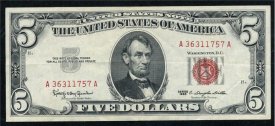
In 1963, JFK was the last president to issue currency outside the Federal Reserve Notes we see today.

atheeconomiccollapseblog.com_wp_content_uploads_2011_12_United_States_Note_JFK_1963.jpg

6 months later JFK was killed and LBJ killed debt free currency.

Fast forward today....

When the FRB implements their austerity (ending QE), do you think the president of the USA is going to have any say whatsoever?

Let's say FRB cuts back on QE and job loses spike up again and Barry doesn't like it... Do you really think he can order the Cartel Boss (FRB) to monetize more debt?

The Federal Reserve Board of Trustees will protect their profits and global holding interest way before they protect the interest of a 4 yr disposable teleprompter reader.

FRB could raise interest rates JUST TO NORMAL (6-8%) and bankrupt the USGovt, or CRASH the economy into the ground.

Conclusion:

Remember the golden rule? he who owns the gold, makes the rules. Well the FRB has unlimited credit, and with it unlimited power.

I remember reading somewhere that one of the reasons Lincoln was assassinated was because he wanted to tinker with the banking system. Is this true?
 
This was an interesting point. It seems to demonstrate the argument that international corporate executives are able to extract wealth out of a corporation by virtue of their position in the company. Why do you think people dependent upon retirement investments don't seem more concerned? They are being ripped off.

I do not understand why pro-Capitalist ideologues aren't up in arms about it.

By the way, forgive the delay in responding to your post.

God Speed,
David
It's a good question. I have a theory about this, but it'll sound conspiratorial. I think senior executives are selected not for their competence at growing the business but for their skill at discretely breaking the law for the benefit of Board members and major shareholders.

If you're a major shareholder, the underlying value of the stock matters to you, but it matters less than some other factors. For example, it matters less than the timing of increases and decreases in stock prices. A stock price can be trending down and you can still be getting much richer, so long as you know to buy during the deep points of dips and to sell at the peak of temporary increases, and bail out before the bottom completely drops out. If the execs will just quietly signal those coming moves to you, it hardly matters what happens to the underlying stock value over time. It also matters a lot whether the company finds other ways to get money into your hands or the hands of those you care about. Will it give your un-employably stupid son-in-law a senior VP job to play golf all day? Will it buy overpriced widgets from some other company you have a bigger stake in? Will it support your campaign if you run for office. Will it sell you a plot of land for pennies on the dollar? Will it give you the use of all kinds of company property?

What you want, as a Board Member or major stockholder, isn't a CEO who is good at his supposed job, but rather a CEO who is good at serving you, personally (including by keeping his mouth shut about where the bodies are buried if things turn ugly). If you find someone who shows he's willing and able to perform for you that way, you'll happily pay him vastly more than he's worth, even as that depletes the resources of the company. And senior execs know that. They know that the key to the giant payday isn't serving the interests of everyday shareholders (whose enforcement rights, in the form of shareholder derivative lawsuits, have been gutted), but rather identifying and serving the few key players needed to back up those seven-figure paydays for you.
 
That was an informative post. Do you agree that top executives are ripping off shareholders because of the power that they hold in corporations? If yes, what would you recommend be done to at least inhibit their behavior? Would you also clarify what these people are doing that is illegal?

God Speed,
David

At most big companies, it's a formalized reality. The higher you go up the ladder, the greater the distance between the rungs. Moving up one rank makes very little percentage difference for people near the bottom -- maybe a 5% raise, and an opportunity to earn an extra 5% in a bonus. But, take the step from manager to director, and you're talking at least twice that much of a salary increase, and three or four times that large an increase in the bonus pool. The step from director to junior VP is even bigger, and from junior VP to senior VP is bigger still. Eventually, you get to the point where going up just one rung on the ladder doubles or triples your earnings.

This is one of the things that points out how foolish the right-wing rhetoric is, about progressive taxation creating a disincentive for moving ahead. In reality, the incentive for moving ahead increases drastically the farther up you go, even after accounting for the impact of progressive taxes. If we're worried about too little incentive, it should be at the bottom end of the ladder, where tons of extra hard work can have extremely small rewards, not at the top of the ladder, where the big-money payoffs really hit.

To put it in monetary terms, moving past just 5% of the workforce, near the bottom end, might take your from an annual income of $15,000 to $20,000, whereas moving past 5% of the workforce, near the top end, might take your annual income from $250,000 to $2.5 million. Even with the higher tax rates applied near the top, the incentive for that extra effort is going to be there in spades, whereas the incentive at the bottom end is pathetically flattened.
 
Last edited:
That was an informative post. Do you agree that top executives are ripping off shareholders because of the power that they hold in corporations? If yes, what would you recommend be done to at least inhibit their behavior? Would you also clarify what these people are doing that is illegal?

God Speed,
David
I'm not sure it's illegal. I think it's just a bias within the system in favor of lavishing rewards near the top. I mean, who decides how much to pay the senior execs? It's the Board, but the Board does so by way of a compensation committee that is often staffed by senior execs, mostly of that company or of other outside companies and even those outsiders would come with a personal bias in favor of high executive compensation. And the Board itself has its compensation, benefits, and employment decisions made by the execs, so they're going to want to engage in some mutual back-scratching. The Board might get input from outside consulting firms, but they know that their ability to find work with the company is largely dependent on pleasing the senior executives who they're being asked to weigh in on, so they have an incentive to favor high compensation, too. And to the extent a company does get involved in something illegal, the Board has a bias in favor of keeping the top execs happy, because they "know where the bodies are buried." That's why you often see even the most incompetent execs walking away from a train wreck of a business with "golden parachute" deals... deals that came with non disclosure agreements, so the exec wouldn't talk about all the shady stuff he knows about.

In the US, executive pay has really gotten out of order. In our economic golden age, in the 1960s, CEOs made around 50-60 times as much as average workers in this country. Today it's more like 475:1. And it's not like that has happened everywhere. In neighboring Canada it's about 20-to-1, and in Japan and Germany, the next two biggest wealthy economies in the world, it's 11 and 12 to 1, respectively.

http://creativeconflictwisdom.wordp...tion-of-ceo-pay-to-average-worker-by-country/

This is a bubble in executive pay, and there are ways to deflate it before it causes too much trouble. Some ideas for bringing executive pay back towards historical and international norms.

(1) Make executive pay much more transparent. ANYONE earning more than three times the median national income at a publicly traded company should have total compensation listed in the 10K, so that rank-and-file shareholders know where their money is really going. And the rules should be tightened so that such disclosures include any indirect compensation in the form of lavish dinners, box seats at sporting events, use of company planes and yachts for personal purposes, better-than-market loans, etc.

(2) At both private and public companies, executive pay over a quarter million dollars per year (indexed for inflation), should not be deductible for the company, for tax purposes.

(3) A sur-tax should be assessed on any executives making more than 100 times the poverty rate.

The bully pulpit could also be used to start to change the culture. There was a period, between the Great Depression and the start of the Reagan era, when it was considered to be in poor taste to flaunt too much wealth -- when CEOs actually took some pride in relatively modest lifestyles that weren't all so much different from what their workers could aspire to. If we could recreate that cultural attitude that there's something shameful about top execs making eight figures while they outsource jobs and make entry level people work for wages so low they have to be subsidized by welfare, then we could start to right the ship. The president has that kind of bully pulpit, but he can't be afraid of Wall Street types expressing outrage when he chides them for their conduct.
 
Thank you. That was an excellent post.

I'm not sure it's illegal. I think it's just a bias within the system in favor of lavishing rewards near the top. I mean, who decides how much to pay the senior execs? It's the Board, but the Board does so by way of a compensation committee that is often staffed by senior execs, mostly of that company or of other outside companies and even those outsiders would come with a personal bias in favor of high executive compensation. And the Board itself has its compensation, benefits, and employment decisions made by the execs, so they're going to want to engage in some mutual back-scratching. The Board might get input from outside consulting firms, but they know that their ability to find work with the company is largely dependent on pleasing the senior executives who they're being asked to weigh in on, so they have an incentive to favor high compensation, too. And to the extent a company does get involved in something illegal, the Board has a bias in favor of keeping the top execs happy, because they "know where the bodies are buried." That's why you often see even the most incompetent execs walking away from a train wreck of a business with "golden parachute" deals... deals that came with non disclosure agreements, so the exec wouldn't talk about all the shady stuff he knows about.

In the US, executive pay has really gotten out of order. In our economic golden age, in the 1960s, CEOs made around 50-60 times as much as average workers in this country. Today it's more like 475:1. And it's not like that has happened everywhere. In neighboring Canada it's about 20-to-1, and in Japan and Germany, the next two biggest wealthy economies in the world, it's 11 and 12 to 1, respectively.

http://creativeconflictwisdom.wordp...tion-of-ceo-pay-to-average-worker-by-country/

This is a bubble in executive pay, and there are ways to deflate it before it causes too much trouble. Some ideas for bringing executive pay back towards historical and international norms.

(1) Make executive pay much more transparent. ANYONE earning more than three times the median national income at a publicly traded company should have total compensation listed in the 10K, so that rank-and-file shareholders know where their money is really going. And the rules should be tightened so that such disclosures include any indirect compensation in the form of lavish dinners, box seats at sporting events, use of company planes and yachts for personal purposes, better-than-market loans, etc.

(2) At both private and public companies, executive pay over a quarter million dollars per year (indexed for inflation), should not be deductible for the company, for tax purposes.

(3) A sur-tax should be assessed on any executives making more than 100 times the poverty rate.

The bully pulpit could also be used to start to change the culture. There was a period, between the Great Depression and the start of the Reagan era, when it was considered to be in poor taste to flaunt too much wealth -- when CEOs actually took some pride in relatively modest lifestyles that weren't all so much different from what their workers could aspire to. If we could recreate that cultural attitude that there's something shameful about top execs making eight figures while they outsource jobs and make entry level people work for wages so low they have to be subsidized by welfare, then we could start to right the ship. The president has that kind of bully pulpit, but he can't be afraid of Wall Street types expressing outrage when he chides them for their conduct.
 
Where did you get the original $million? Are you saying, by the way, that you made $1,000 on the labor of each individual or a group of workers? In any event, your example calls for a greatly increased minimum wage and would seem to qualify for the mechanic's lien. You don't want to piss off Thomas Jefferson do you?

I use $1M of MY money to start a business,hire laborers who agree to work at $10 hr, yet profit $1,000 per hr off the workers labor, workers are not entitled to any of my profits
 
Where did you get the original $million? Are you saying, by the way, that you made $1,000 on the labor of each individual or a group of workers? In any event, your example calls for a greatly increased minimum wage and would seem to qualify for the mechanic's lien. You don't want to piss off Thomas Jefferson do you?

Wordly's example isn't useful, since his competitor who settles for $100 in profit on each hour of labor, would quickly put him out of bidness. Of course that doesn't help the laborer, if he gets but $10 an hour either way. And of course, the guy making $100 per, is probably more inclined to drive the employee down to $9 an hour, than is the one making $1,000 per.

We need to think in terms of making it to the employers advantage, to pay his employees more. That's easier said than done, but I think our tax system is the best avenue.

While pushing wages down from $10 to $9 is 10% and much less for the $1,000 figure, someone making a lot more money off of employees are probably much more distant from them whereas the $10 guy may actually work alongside his/her employees; the latter are more likely to see the humanity in his employees.

I would agree that taxes are the best way to better distribute income, but paying more to employees violates the very premise of how profits are earned because profits are unpaid wages.

God Speed,
David
 
Back
Top